
Best Small Business Loan Lenders for Startups and SMEs in the UK
Running a business in the UK often feels like managing timing more than anything else. Money goes out today. Revenue comes in later. Growth sits somewhere in between, waiting for the right push.
According to the British Business Bank, a significant portion of small businesses rely on external finance at some stage, especially during early growth or periods of instability. That tells you something important. Funding is not a fallback. It is part of how businesses move forward.
Still, choosing between small business loan lenders is rarely straightforward. Options look similar on the surface, yet the real difference shows up in cost, flexibility, and long-term impact.
Let’s break it down properly.
What Are the Main Types of Funding Available for UK Small Businesses?

Before comparing lenders, it helps to understand how funding actually works.
Term Loans
A fixed loan amount repaid over time with interest.
Used for expansion, equipment, or hiring. Predictable, structured, and widely offered.
Government-Backed Loans
Schemes supported by the UK government, mainly delivered through the British Business Bank.
These reduce lender risk, which improves access for startups.
Secured Loans
Backed by assets such as property or machinery.
Lower interest rates are common because the lender has collateral. Many growing firms explore secured business loans when borrowing larger amounts.
Revolving Credit
Flexible funding that works like a safety net. Borrow, repay, and reuse.
Often structured as a revolving credit facility, especially useful for managing uneven cash flow.
Invoice Finance
Turns unpaid invoices into immediate working capital.
Helpful if clients take 30 to 90 days to pay.
Also Read – Quick Business Funding in the UK for Small Businesses with Bad Credit
Best Small Business Loan Lenders in the UK
Not every lender suits every business. The right choice depends on your stage, financials, and urgency.
Start Up Loans (Government-backed)
- Up to £25,000 per individual
- Fixed 6% interest per year
- Repayment term: 1 to 5 years
Delivered through the British Business Bank, this scheme is one of the most reliable ways to start small business loan funding. It also includes free mentoring, which adds real value beyond the money.
Funding Circle
- £10,000 to £500,000 loans
- Terms up to 6 years
- Typically requires at least 2 years of trading
Well suited to established SMEs with consistent revenue. Approval is data-driven, so strong financial records matter.
Iwoca
- Credit facility up to £500,000
- Short-term, flexible borrowing
Known for speed and accessibility. Costs are higher than traditional lenders, but many businesses accept that trade-off for quick cash flow support.
Tide (via lending partners)
- Loans offered through partnered lenders
- Integrated within Tide accounts
A convenient option for startups already using digital banking. The application process is simple, though pricing varies by partner.
High Street Banks (HSBC, Barclays, Lloyds)
- Lower interest rates for strong applicants
- More detailed checks and longer approval times
Best suited for businesses with stable income, strong credit, and a solid trading history.
Many UK businesses explore lenders like Funding Circle or Iwoca when searching for funding. However, comparing multiple lenders through platforms like Best Business Loans often helps identify more suitable and cost-effective options based on your business profile.
Small Business Loans Comparison: What Actually Matters?
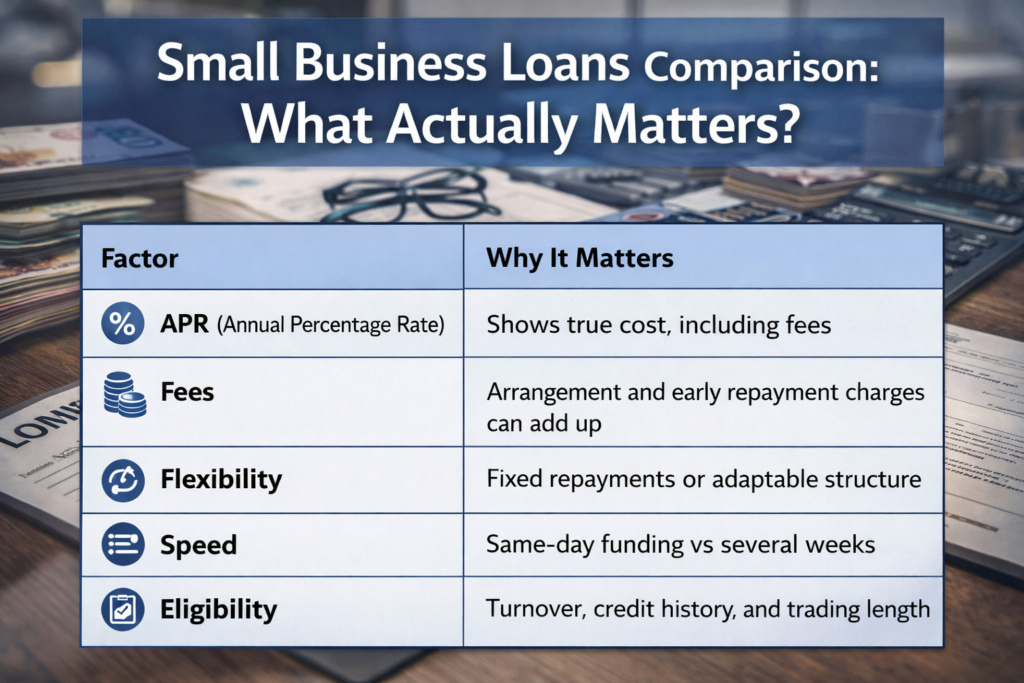
A proper small business loans comparison goes beyond just the rate.
| Factor | Why It Matters |
| APR (Annual Percentage Rate) | Shows true cost, including fees |
| Fees | Arrangement and early repayment charges can add up |
| Flexibility | Fixed repayments or adaptable structure |
| Speed | Same-day funding vs several weeks |
| Eligibility | Turnover, credit history, and trading length |
A loan that looks cheap upfront may cost more over time if hidden fees are involved.
Compare Interest Rates for Small Business Lenders
Rates in the UK vary depending on risk and lender type.
- Start Up Loans: fixed at 6%
- High street banks: typically 4% to 10% for low-risk borrowers
- Alternative lenders: commonly 8% to 25% APR
These ranges are consistent with UK market data from lenders and financial comparison platforms. The exact rate you receive depends on your credit profile, turnover, and business stability.
Also Read – Need Funds for Your Online Store? Ecommerce Business Loans UK Explained
How to Apply for a Small Business Loan Online
Most lenders now offer a streamlined digital process.
Typical steps:
1. Prepare your documents
Bank statements, accounts, and cash flow forecasts
2. Choose a suitable lender
Match their criteria with your business profile
3. Complete the application
Usually takes 10 to 20 minutes online
4. Credit and affordability checks
This determines approval and pricing
5. Receive funds
Within 24 to 48 hours for alternative lenders, or longer for banks
If you want a broader view, exploring platforms that list the best business loans UK can help you compare multiple lenders quickly.
Will a Business Loan Affect Your Mortgage?
It can, but not always in the way people expect.
Mortgage lenders assess affordability by reviewing your income and existing financial commitments. A business loan increases your liabilities, which may reduce borrowing capacity.
On the other hand:
- A profitable business strengthens your financial profile
- Consistent repayments improve your credit record
So, when people ask will business loan affect mortgage, the honest answer is that it depends on how well the loan is managed.
Can I Get a New Mortgage with an Existing Business Loan?
Yes, many business owners do.
Lenders will review:
- Your business income consistency
- Debt-to-income ratio
- Personal and business credit history
If your finances are stable, having a business loan does not automatically prevent mortgage approval.
When Does a Small Business Have to Pay Tax in the UK?

This is one area where accuracy matters.
- Corporation Tax is due 9 months and 1 day after the end of your accounting period, according to HMRC
- VAT is usually filed and paid quarterly if registered
- Sole traders submit Self Assessment annually, with deadlines in January
Late planning often leads to cash pressure. Many businesses use short-term funding such as best VAT loans UK or financing options for paying corporation tax to manage timing gaps.
Also Read – Best Low Interest Business Loans in the UK for Startups
Will Small Businesses Get Another Grant?
Grants still exist, though they are more targeted than before.
You may find:
- Local council support schemes
- Industry-specific funding
- Innovation grants through UK Research and Innovation
They are useful but competitive. Most businesses treat grants as a bonus rather than a core funding plan.
Final Thoughts
Funding is not just about solving a problem. It is about creating room to operate without constant financial pressure.
The right lender gives you flexibility and control. The wrong one adds cost and stress that quietly builds over time.
Take a moment before deciding. Look beyond speed. Check the full cost. Think about how repayments will feel in a slow month, not just a good one.
If you are ready to move forward, exploring tailored options through platforms offering the best business loans UK is a practical next step.
A well-chosen loan does not just support your business. It changes how confidently you run it.
FAQs
- Can a new small business get a loan in the UK?
Yes. Government-backed schemes like Start Up Loans and some alternative lenders support new businesses without trading history.
- What are the main types of funding available for UK small businesses?
Term loans, government-backed loans, secured loans, revolving credit, and invoice finance are the most common.
- Which lenders offer government-backed loans?
Start Up Loans, supported by the British Business Bank, is the primary scheme for startups.
- How long does loan approval take?
Alternative lenders may approve within 24 to 48 hours. Banks can take several weeks depending on complexity.
- Will a business loan affect my mortgage?
It can impact affordability, but strong income and responsible repayment can balance the effect.
Discover the Latest Trends
Stay informed with our latest articles and resources.