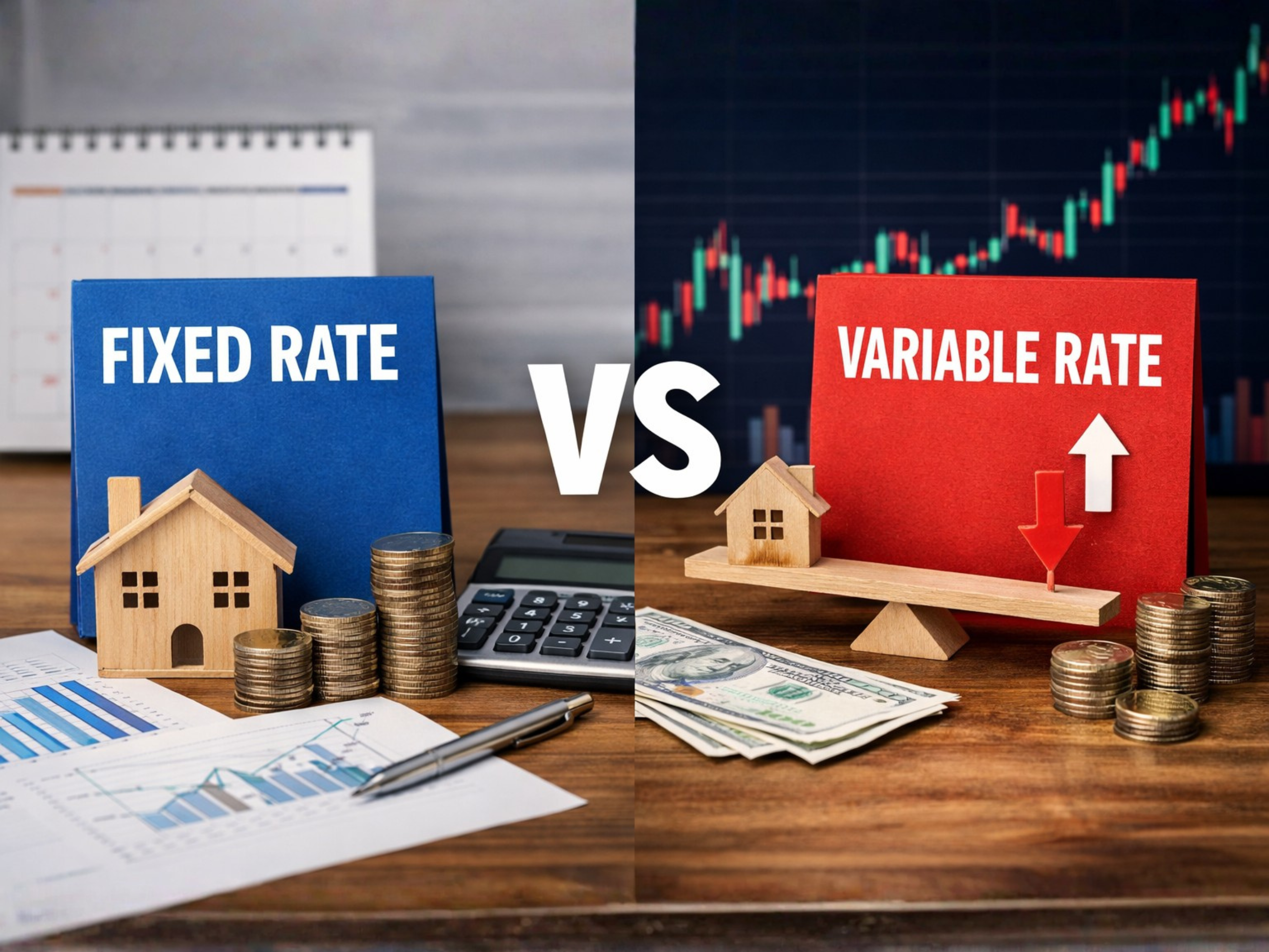
Fixed vs Variable Interest Rates: Which Is Safer in 2026?
Earlier this year, one of our clients in Manchester delayed upgrading his production line. Not because he lacked demand. Not because he lacked confidence. He hesitated because he could not decide between fixed and Variable Interest Rates.
Sound familiar?
With economic forecasts shifting and headlines constantly asking “are mortgage interest rates going down?”, UK business owners are understandably cautious. In 2026, the real question is not just what costs less. It is what protects your cash flow when the unexpected happens.
Let’s break it down properly.
What Are Fixed Interest Rates and Why Do They Feel Safer?
A fixed rate means your repayments stay exactly the same for the agreed term. No surprises. No sudden increases if the Bank of England adjusts policy.
For many directors, this predictability feels like locking in your energy tariff before winter. You know what leaves your account each month, which makes budgeting straightforward.
There is also a psychological benefit. When you fix your rate, you remove one moving part from your business finances. That stability matters, especially if you are already managing supplier costs, payroll and fluctuating revenue.
However, fixed does not always mean cheaper. If rates drop significantly, you remain tied to your agreed rate. That is why many borrowers compare offers carefully, especially when reviewing the best fixed interest rates mortgage deals as a reference point for wider lending trends.
Fixed interest rates savings work in a similar way. Certainty often comes at a slight premium.
Understanding Variable Interest Rates in 2026
Now to the big one: Variable Interest Rates.
With a variable rate, your repayments can rise or fall depending on market conditions. If the base rate drops, you benefit. If it rises, your repayments increase.
In 2026, volatility is still a real factor. Inflation has cooled compared to previous years, but the mortgage interest rates average across the UK has not completely stabilised. That makes variable borrowing both an opportunity and a risk.
So who typically chooses variable?
Often, it is growth-focused businesses. If you expect to repay early or anticipate improving trading conditions, a variable structure can provide flexibility. For example, a company using a revolving credit facility UK may accept rate fluctuations in exchange for adaptable access to funds.
It is not about gambling. It is about strategy.
Also Read – How the Right Lender Helped My Business Stay Stable During Payment Delays
Which Is Safer for a UK Business Owner?
Safety depends on your business model, not headlines.
If your margins are tight and every percentage point matters, fixed rates may offer peace of mind. Hospitality venues, seasonal retailers and firms with heavy overheads often prefer stability.
On the other hand, if your cash flow is strong and you can absorb temporary increases, Variable Interest Rates could work in your favour over time.
Ask yourself three honest questions:
- Can your business comfortably handle a rate increase of 1 to 2 percent?
- Are you borrowing for long-term stability or short-term expansion?
- Do you plan to refinance early?
If you are using specialist finance such as VAT loans or working with unsecured business loan lenders, flexibility might outweigh predictability.
There is no universal “safe” option. There is only the option that aligns with your risk tolerance and growth plans.
What Are Rates Likely to Do in 2026?
Many business owners are still asking, are mortgage interest rates going down?
Forecasts suggest gradual moderation rather than dramatic drops. That means sharp swings are less likely than in previous years, but uncertainty has not disappeared.
For business lending, that translates to cautious optimism. Lenders remain competitive, yet they are pricing risk carefully.
In practical terms, fixing today secures current levels. Choosing variable means betting on modest improvements without major shocks.
A Smarter Way to Decide
Instead of choosing based purely on fear or hope, consider blending strategy with advice.
Some businesses split borrowing structures. Others fix during uncertain periods and refinance later. The smartest decisions usually come from reviewing real numbers, not social media speculation.
At Best Business Loans, we work closely with UK decision-makers to assess affordability, risk exposure and long-term objectives. Whether you are exploring expansion, managing short-term tax commitments, or comparing funding options, clarity beats guesswork every time.
Also Read – Unsecured Business Funding for Startups With Less Than 6 Months Trading History
Final Thoughts
Interest rates will always move. Markets change. Policies shift. What matters is building resilience into your business finances.
Fixed rates offer stability. Variable rates offer flexibility. Neither is automatically safer. The safest option is the one that supports your cash flow and growth strategy without keeping you awake at 2 am.
If you are weighing up funding options in 2026, speak to an experienced adviser who understands the UK lending landscape. A short conversation today could prevent costly stress tomorrow.
FAQs
- Are Variable Interest Rates risky for small businesses?
They can be if your cash flow is tight. However, businesses with strong reserves may benefit if rates fall.
- Are mortgage interest rates going down in 2026?
Most forecasts suggest gradual stabilisation rather than sharp declines, but changes remain possible.
- Do fixed rates always cost more?
Not always. They sometimes carry a slight premium for stability, but competitive deals are available depending on market conditions.
- Can I switch from variable to fixed later?
Yes, refinancing is possible, though early repayment fees may apply depending on your agreement.
- What type of loan works best for flexible borrowing?
Products like a revolving credit facility UK often provide flexibility, especially for managing short-term cash flow needs.
Discover the Latest Trends
Stay informed with our latest articles and resources.