Business Loan Interest Rates UK
When considering a business loan in the UK, understanding interest rates is crucial. The rate determines how much you pay over the life of the loan and can significantly impact your cash flow and total borrowing cost. Many business owners focus solely on headline rates, but other factors like fees, repayment terms, and loan type are equally important.
In this guide, we break down business loan interest rates UK, what affects them, and how to secure the best rates for your company.
What Are Business Loan Interest Rates?
An interest rate is essentially the cost of borrowing. It is expressed as a percentage of the loan amount and charged over the loan term. Business loan interest rates in the UK vary widely depending on:
- Loan type (secured or unsecured)
- Lender policies
- Economic conditions
- Borrower creditworthiness
Understanding how interest is calculated helps business owners make informed decisions.
Secured vs Unsecured Loan Rates
- Secured Business Loans
- Lower interest rates due to collateral reducing lender risk.
- Higher borrowing amounts and longer repayment terms.
- Suitable for businesses with valuable assets.
- Internal link: Secured Business Loans
- Unsecured Business Loans
- Higher interest rates because lenders assume more risk.
- Faster approval process, often without asset evaluation.
- Ideal for startups or smaller businesses.
- Internal link: Unsecured Business Loans
Factors That Affect Business Loan Interest Rates
- Credit Score – Strong personal and business credit histories generally secure lower rates.
- Loan Size – Larger loans may attract more competitive rates due to negotiation leverage.
- Loan Term – Short-term loans often have higher monthly repayments but lower overall interest costs. Long-term loans spread repayments, which may slightly increase total interest.
- Economic Conditions – The Bank of England base rate impacts lending rates; when the base rate rises, interest rates on business loans may also increase.
- Industry Risk – Lenders assess sector risk; high-risk sectors may face higher rates.
- Repayment Flexibility – Loans with flexible repayment schedules can sometimes have slightly higher rates.
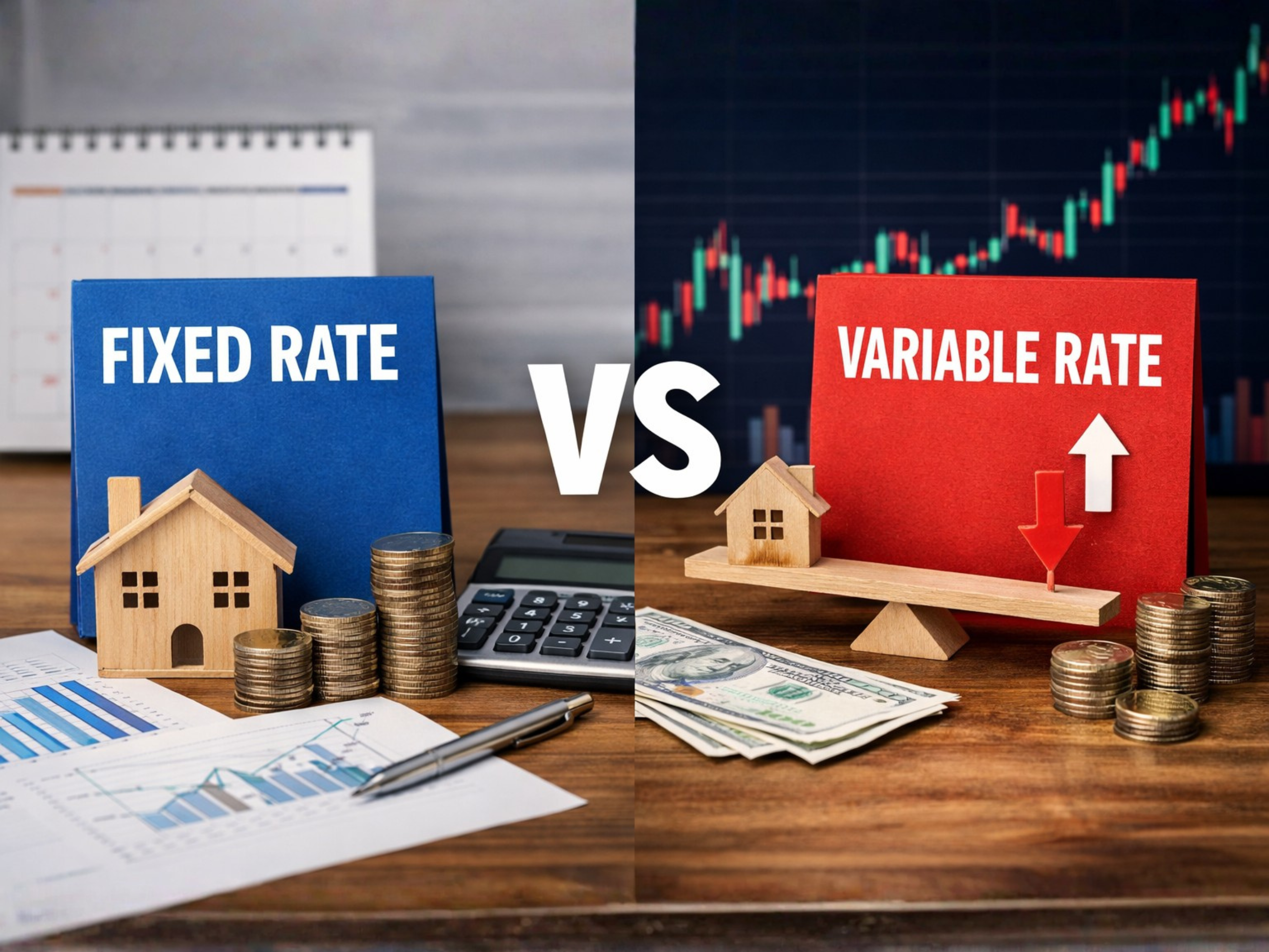
Fixed vs Variable Interest Rates
- Fixed Interest Rates
- Remain consistent throughout the loan term.
- Provide certainty in budgeting monthly repayments.
- Useful for businesses with tight cash flow planning.
- Variable Interest Rates
- Can fluctuate with market conditions.
- May initially be lower than fixed rates but can increase over time.
- Suitable for businesses that can absorb some repayment variability.
How To Compare Business Loan Interest Rates
When comparing interest rates, consider the total cost of borrowing, not just the headline rate:
- Include arrangement and legal fees
- Factor in early repayment penalties
- Compare repayment schedules
- Consider fixed vs variable rates
- Use a trusted comparison platform: Compare Business Loans
Internal linking to secured and unsecured loan pages ensures users can explore all loan types.
Real World Examples
- A £50,000 secured loan over 5 years at 6% fixed interest may have monthly repayments of £966.
- The same amount unsecured at 12% could require £1,112 per month, showing the impact of interest rates on affordability.
How To Secure Competitive Rates
- Improve Your Credit Profile – Pay off existing debts, correct errors in credit reports.
- Prepare Accurate Financial Statements – Demonstrates your business’s stability.
- Provide Collateral If Possible – Enables access to lower secured rates.
- Compare Multiple Lenders – Don’t accept the first offer; look for better terms.
- Use Specialist Finance Providers – Some lenders offer lower rates to certain industries.
Other Costs to Consider
- Arrangement fees
- Early repayment charges
- Legal or valuation fees
- Service or management fees for invoice finance or merchant cash advances
Factoring these into your cost analysis ensures accurate comparison of options.
FAQ – Business Loan Interest Rates UK
Q1: Can I negotiate my business loan interest rate?
Yes, especially if you have strong credit or multiple competitive offers.
Q2: Does a fixed rate make financial sense for small businesses?
Fixed rates provide certainty and are recommended for businesses with strict monthly cash flow requirements.
Q3: How does the Bank of England base rate impact my loan?
Variable rates often move in line with base rate changes, while fixed rates remain constant.
Q4: Why are unsecured loans more expensive?
Lenders take on more risk without collateral, so they charge higher interest to mitigate potential defaults.
Reach Out To Us Today
Understanding interest rates is crucial when applying for a business loan. At Best Business Loans, we help businesses compare rates, evaluate loan types, and choose the most suitable funding.
Contact Us Today to secure a business loan with competitive interest rates and flexible terms.
Discover the Latest Trends
Stay informed with our latest articles and resources.